
Expert Guide: How to Determine the Value of Your Postage Stamp Collection
Historical Overview of Philately
Philately became popular in the mid-19th century when the first adhesive postage stamp, the Penny Black, was introduced in 1840, leading to the widespread adoption of the postage stamp system.
Dr. John Edward Gray, a zoologist at the British Museum, is believed to be one of the earliest stamp collectors. He began collecting revenue stamps and later expanded his collection to include Penny Blacks and others. Dr. Gray’s collection and his creation of one of the oldest postage stamp catalogs marked the early popularity of philately.
Over time, philatelic clubs were established, making stamp collecting more interesting. Today, we have The Royal Philatelic Society, established in 1869, as the oldest philatelic society in the world.
As interest in stamp collecting grew, people began seeking out rare stamps and expanding their collections, leading them to start finding the values of these stamps.
The value of a postage stamp can vary due to factors such as quality, clarity, rarity, and current market value. Let’s explore how to determine a postage stamp’s appropriate value.
Identifying Fake Postage Stamps
The first vital step is to check the authenticity of our postage stamp collection, as unknowingly, we can have some forged stamps in our collection. Stamps that are too similar, with minor differences, can make it challenging to determine if the stamp is original or not. One of the most helpful ways to find out is through an online search regarding the visual appearance and paper quality of genuine postage stamps. One site that can be helpful is http://stampforgeries.com/. Additionally, you can conduct a general online search and seek help in philately forums to obtain the opinions of other fellow stamp collectors.
While the website (http://stampforgeries.com/) can be a useful resource, we cannot solely rely on it. It’s important to cross-reference information and seek multiple sources to verify the authenticity of stamps.
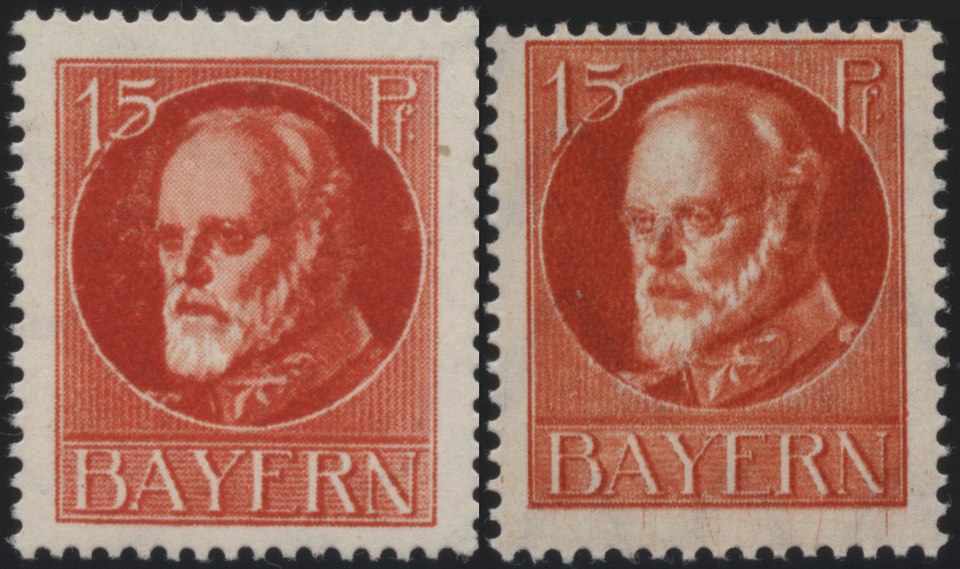
The Bavarian 15 Pf War Mail stamp featuring Ludwig III was forged by the British during World War I. The stamp on the left is the British-made forgery, and the stamp on the right is the genuine original.
Source
Assessing the Condition of Your Postage Stamps
The second step is to analyse your personal collection in its current state, dividing them according to rarity and condition. The condition of your stamps significantly influences their value. Stamps in mint condition or with rare postmarks generally command higher prices than those that are damaged or heavily used.
Utilize Stamp Catalogues and Online Resources for Research
A general online search to find the market value of your postage stamps by locating the closest condition to yours online and recording the average prices at which they are being sold on different websites is a great way to determine the current market value.
Stamp catalogues such as Stanley Gibbons provide comprehensive listings and valuations of stamps from around the world. These catalogues are updated periodically and can serve as valuable references for determining the approximate value of your stamps.
Other websites like eBay and Delcampe can also provide insights into the prices at which similar stamps are selling.

Explore Philatelic Events: Attend Stamp Shows or Auctions
Expanding your circle by attending stamp shows or auctions can deepen your knowledge and familiarity with postage stamp pricing. It also allows you to gain a firsthand look at the market and helps you gauge the value of your collection based on similar items’ selling prices. Additionally, you can consult with dealers and collectors who may offer expertise and insights into the value of your stamps.
- Here are some upcoming auction dates in the UK at Warwick & Warwick that may interest you: https://www.warwickandwarwick.com/auctions.
- Cherrystone is a world leader in Philatelic Auctions, where you can find the best current postage stamp auction events: https://www.cherrystoneauctions.com/.
Get Expert Valuation for Your Stamp Collection
If you have a particularly valuable collection, consider seeking a professional appraisal from a reputable philatelic expert or auction house. They can provide a detailed assessment of your collection’s worth based on market demand, rarity, and condition.
As mentioned earlier, Warwick & Warwick can provide free advice. You can also reach out to your local auction house and other relevant experts. Keep in mind to gather different opinions and conduct your personal research before coming to a final decision.
Connect with Philatelic Enthusiasts: Join Stamp Collecting Communities
Engage with online forums, social media groups, or local stamp clubs to connect with fellow collectors and enthusiasts. They can offer advice, share knowledge, and help you assess the value of your collection based on their experience and expertise.
StampCommunity.org is one of the largest and most active online philately forums, making it an excellent place for stamp collectors to join discussions, ask questions, and connect with fellow enthusiasts.
Conclusion: Understanding the Value of Your Postage Stamp Collection
Postage stamp collecting is a hobby that has created vibrant communities, auction houses, and online platforms. Each postage stamp holds rich historical and aesthetic value, prompting individuals to seek their true worth through both online and offline sales. Conversely, philatelists are eager to acquire stamps to enrich their collections, albeit at the right price.
The determination of a postage stamp’s value is influenced by various factors, primarily market demand and supply. For example, the scarcity and historical significance of stamps like the Mauritius ‘Post Office’ stamps can greatly impact their value, as demonstrated by their recent sale for 8.1 million euros in 2021.
In conclusion, the valuation of postage stamps involves multiple factors, emphasizing the importance of thorough research rather than relying solely on a single evaluation.