
Brief History of Newfoundland
Newfoundland, Canada’s largest island outside of the north, ranks as the country’s fourth largest island and the sixteenth largest island globally. Situated off the eastern coast of the North American mainland, it forms the western part of the Canadian province of Newfoundland and Labrador, often referred to as Labrador.
Rich in history, Newfoundland is believed to have been inhabited thousands of years ago by Indigenous peoples, including the Beothuk before European discovery.
In 1497, the Italian explorer John Cabot (Giovanni Caboto) made landfall on Newfoundland’s coast, initiating European exploration and eventual colonization.
During the 16th century, European fishing fleets, primarily from England and France, began frequenting Newfoundland’s shores, establishing it as a significant center for the Atlantic cod fishery. This attracted fishermen from Europe, leading to the establishment of permanent settlements by English and French colonists in the early 17th century. These settlements sparked conflicts over control of the island.
By the early 18th century, Newfoundland came under British control, with the Treaty of Utrecht in 1713 formalizing British sovereignty. It remained a British colony until 1949 when it joined Canada as a province.
Newfoundland boasts a distinct cultural identity, shaped by its history, geography, and isolation. Known as Newfoundlanders, its people are renowned for their friendliness, hospitality, and strong sense of community. The province’s unique dialect, traditional music (including Newfoundland folk music and sea shanties), and vibrant arts scene contribute to its rich cultural heritage.
Newfoundland offers a captivating blend of rich history, breathtaking natural landscapes, and a vibrant cultural tapestry.
Queen Victoria Newfoundland Postage Stamps
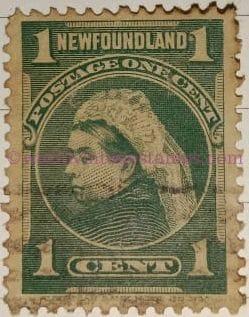
Issued on: 1898-06
Series: Royal Family of Queen Victoria
Face Value: 1 Newfoundland Cent
Emission: Definitive
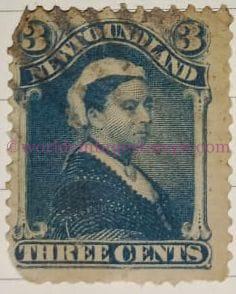
Issued on: 1896
Series: Queen Victoria Pictorials
Face Value: 3 Newfoundland Cents
Emission: Definitive
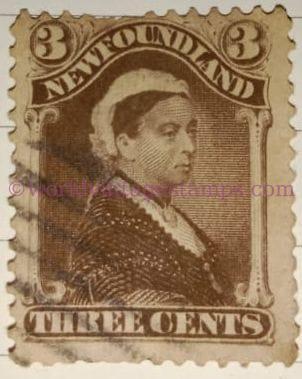
Issued on: 1896
Series: Queen Victoria Pictorials
Face Value: 3 Newfoundland Cents
Emission: Definitive
Queen Victoria’s Legacy in Newfoundland
Queen Victoria Wing
Newfoundland, now part of the province of Newfoundland and Labrador, still shows the influence of Queen Victoria through its place names and historic landmarks. One notable example is the Queen Victoria Wing in St. John’s, a designated municipal heritage building constructed around 1896–1897 as part of the Old General Hospital. Named to honour Queen Victoria during her Diamond Jubilee year, the Wing holds historic significance for its association with women’s and children’s healthcare and nursing in the province. Its distinctive rounded towers and narrow windows make it a notable example of late 19th‑century institutional architecture.
For more information and historical details about the Queen Victoria Wing, visit Heritage Newfoundland & Labrador
Victoria Day
Across Canada, Victoria Day celebrates Queen Victoria’s birthday on 24 May. The holiday is officially recognized as a statutory holiday in six of Canada’s ten provinces and in all three territories. In Newfoundland and Labrador, Victoria Day is observed as a government or cultural holiday but is not a statutory paid holiday for employees. The holiday is celebrated on the Monday preceding 25 May, usually falling between 18 and 24 May depending on the calendar year.
Source: City News Youtube
If you have any Newfoundland postage stamps or details, please do not hesitate to share them with us in the comments.