
Anthony van Dyck Belgian Commemorative Poster Stamp (From My Personal Collection)
The stamp shown below is a Belgian commemorative poster stamp from 1899, created to celebrate the 300th anniversary of Sir Anthony van Dyck’s birth. The stamp, inscribed “GROOTE FEESTEN ANTWERPEN – GRANDES FÊTES ANVERS” (meaning “Great Festivals Antwerp”), features Dutch and French text, reflecting Belgium’s bilingual heritage.
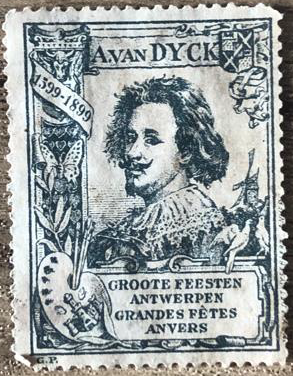
In the top-left corner, the years 1599–1899 are visible, referencing van Dyck’s birth year and the year of the celebration, which took place exactly 300 years later. In the bottom-left corner, there is an artist’s palette with a castle on it, symbolising both his creative legacy and his association with the royal family. The stamp’s design as a whole reflects his imaginative world, artistic talent, and the way he captured his surroundings through the lens of art.
Although not valid for postage, these stamps known as “Cinderella” or poster stamps were produced for historical and celebratory purposes.
Sir Anthony van Dyck: A Master of 17th-Century Portraiture
Sir Anthony van Dyck (1599–1641) was a Flemish Baroque painter born in Antwerp, then part of the Spanish Netherlands (modern-day Belgium). He gained fame for his refined portraits of European nobility, as well as religious and mythological subjects. His mastery of draughtsmanship and etching further cemented his reputation. He eventually rose to prominence as official court painter to King Charles I of England.
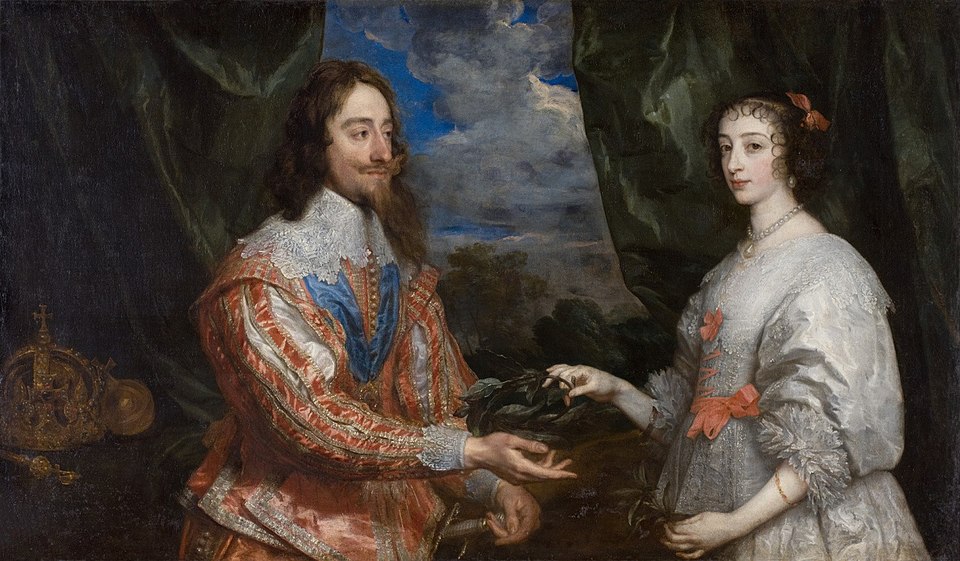
Source: Portrait of King Charles I and Queen Henrietta Maria by Van Dyck
Anthony van Dyck’s Early Life and Artistic Development
Van Dyck was the seventh of twelve children in a prosperous family. He was baptised on 23 March 1599 at Onze-Lieve-Vrouwekerk (now the Cathedral of Our Lady) in Antwerp. By 1618, he had become a master in the Guild of Saint Luke.
Although the exact date is uncertain, van Dyck entered the studio of Peter Paul Rubens at a young age, working alongside other apprentices and contributing to large-scale commissions in the early 1620s.
Anthony van Dyck’s Career in England and Knighthood
In 1621, van Dyck travelled to England, where he briefly worked for King James I. After about four months, he returned to Flanders and then continued on to Italy, where he spent six years refining his style and studying the works of the Italian masters.
By 1623, van Dyck had established connections with agents of Charles I, to whom he sent several portraits that greatly impressed the king. Being fond of painting and the way it represented the monarchy, King Charles I appointed van Dyck as court painter in April 1632. Just a few months later, in July, he was knighted. He was granted a residence at Blackfriars and lodgings at Eltham Palace, though the palace was not occupied by the royal family.
Anthony van Dyck’s Artistic Influence and Legacy
Van Dyck transformed English portraiture, introducing a sense of elegance, poise, and psychological depth that shaped the genre for over 150 years. His signature beard style, a moustache and goatee with shaved cheeks, became so iconic it was known as the “Van Dyke beard.”
Anthony van Dyck’s Portraits of King Charles I and Commemorative Stamps
Among van Dyck’s most celebrated works are his portraits of King Charles I, including the Equestrian Portrait of Charles I and Charles I in Three Positions. These images portrayed the monarch with a sense of majesty and authority, reinforcing the idealised vision of kingship.
To commemorate his 400th birth anniversary, Antigua and Barbuda released a stamp sheet in 2000 featuring Charles I in Three Positions and other works by van Dyck. Several other countries including France, Gambia, Maldives, St. Vincent & the Grenadines, Hungary, and Paraguay have also honoured van Dyck’s legacy through stamps.
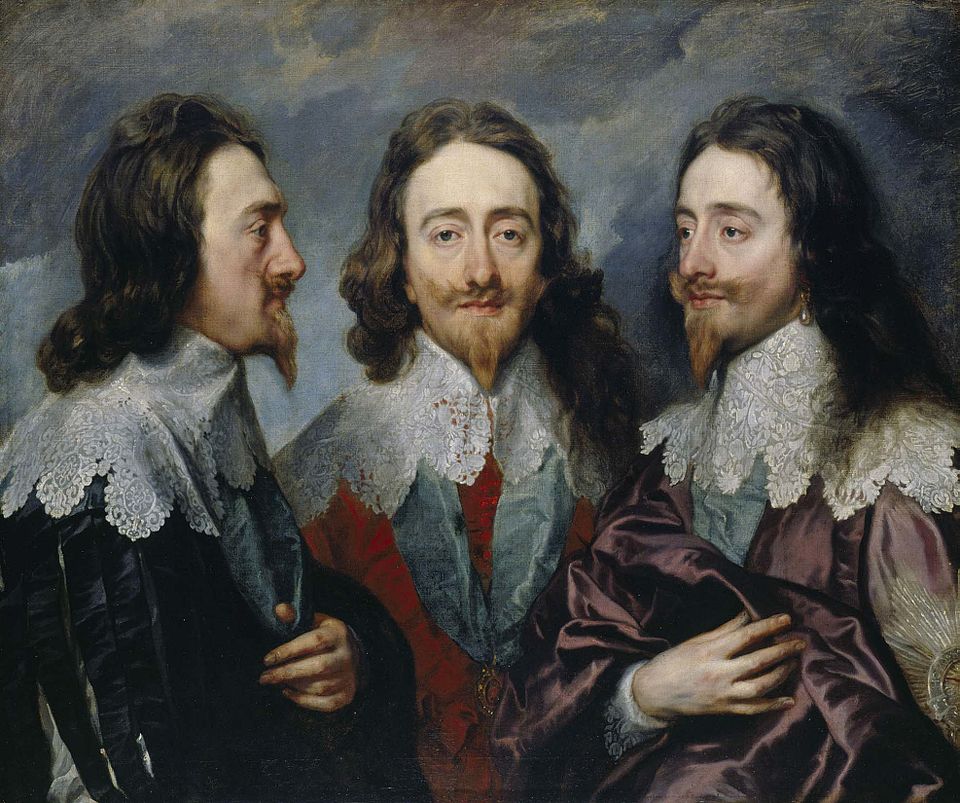
Source: Triple portrait of King Charles I, symbolising his rule over England, Scotland, and Ireland
The most recent philatelic tribute is a 2024 stamp sheet from Sierra Leone, released for collectors to mark the 425th anniversary of van Dyck’s birth. While officially issued, such stamps are often produced primarily for the international collector market and are rarely used for local postage.
Join the Conversation: Showcase Your Anthony van Dyck Stamps
Sir Anthony van Dyck’s artistic legacy continues to inspire not only art enthusiasts but also collectors around the world. His iconic portraits of European nobility, especially King Charles I, have cemented his place in history, and these commemorative stamps serve as a beautiful tribute to his enduring influence. Whether you are a philatelist or an admirer of fine art, these stamps capture the essence of van Dyck’s brilliance.
We’d love to hear from you! If you have a Van Dyck stamp or a piece of art inspired by his work, feel free to share it with us in the comments below. Don’t forget to share this page with fellow art and stamp collectors to celebrate the legacy of one of history’s greatest portrait painters!